On 1 February, the armed forces of Myanmar (Tatmadaw), ostensibly acting on allegations of voter fraud in the general elections of 8 November 2020, detained numerous government officials, including State Counsellor Daw Aung San Suu Kyi, President U Win Myint, and Union Election Commission (UEC) Chair U Hla Thein, as well as pro-democracy activists and politicians from the ruling National League for Democracy (NLD) and other parties.
The Tatmadaw subsequently announced that it would seize power, declare a one-year state of emergency, and install Vice-President and retired general U Myint Swe as acting president. It was also announced that new elections would be held after the state of emergency under a new election commission, which was later appointed on the night of 2 February.
The undersigned election or human rights monitoring organizations condemn the military coup in Myanmar and call for the immediate release of all detained politicians, government officials, and activists. The Tatmadaw must restore power to the civilian-led government, and seek redress of election-related complaints through the due process of law established under the 2008 Constitution.
Indeed, Myanmar’s Constitution and election laws provide a mechanism to resolve disputes in the form of election tribunals. The military-backed Union Solidarity and Development Party (USDP), which has repeatedly made claims of vote rigging and irregularities in the recent general elections, has like any other stakeholder the legal right to formally contest election results. It certainly has done so, filing 174 complaints out of the 287 received by the UEC.
Election observers were looking forward to seeing all election-related complaints and potential evidence presented and addressed in tribunal proceedings. According to our information, the UEC was about to proceed with the appointment of election tribunals when the military intervened. Election dispute resolution is an integral part of any electoral process, which rests on the fundamental premise that all sides act in good faith.
Therefore, the Tatmadaw must back down from its coup attempt and instead engage in a peaceful and transparent election dispute resolution process. The road to a fully realized democracy is long and arduous, but it is important that all stakeholders commit to upholding and protecting democratic norms. A repeat of what transpired after the 1990 general elections would mark a stark return to authoritarianism and will not be accepted by the people of Myanmar and the international community.
Signatories:
Asian Network for Free Elections (ANFREL)
Association for Elections and Democracy (PERLUDEM), Indonesia
Cambodian Human Rights Action Coalition (CHRAC)
Cambodian Human Rights and Development Association (ADHOC)
Cambodian Institute for Democracy (CID)
Cambodian League for the Promotion and Defense of Human Rights (LICADHO)
Center for Alliance of Labor and Human Rights (CENTRAL), Cambodia
Centre for Monitoring Election Violence (CMEV), Sri Lanka
Centre for Policy Alternatives (CPA), Sri Lanka
Citizen Congress Watch (CCW), Taiwan
Civil Network OPORA, Ukraine
Coalition for Clean and Fair Elections (Bersih 2.0), Malaysia
Coalition of Cambodian Farmers Community (CCFC)
Committee for Free and Fair Elections in Cambodia (COMFREL)
East and Horn of Africa Election Observers Network (E-HORN)
Elections Observation Group (ELOG), Kenya
ENGAGE, Malaysia
Free and Fair Election Forum (FEFA), Afghanistan
Free and Fair Election Network (FAFEN), Pakistan
General Election Observation Committee (GEOC)/Nepal Law Society
Global Network of Domestic Election Monitors (GNDEM)
Hong Kong Election Observation Project (HKEOP)
Independent Democracy of Informal Economy Association (IDEA), Cambodia
Independent Election Monitoring Committee (KIPP), Indonesia
Jaringan Pendidikan Pemilih untuk Rakyat (JPPR), Indonesia
Legal Network for Truthful Elections (LENTE), Philippines
MARUAH (Working Group for ASEAN Human Rights Mechanism, Singapore)
Movement for Free & Fair Elections (MDDE), Sri Lanka
National Citizens’ Movement for Free Elections (NAMFREL), Philippines
National Election Observation Committee (NEOC), Nepal
National Election Watch Sierra Leone (NEWSL)
Neutral & Impartial Committee for Free & Fair Elections in Cambodia (NICFEC)
Open Forum for Democracy Foundation (P-NET), Thailand
People Center for Development and Peace (PDP-Center), Cambodia
People’s Action for Free and Fair Elections (PAFFREL), Sri Lanka
Pusat KOMAS, Malaysia
Suara Rakyat Malaysia (SUARAM)
Thai Action Committee for Democracy in Burma (TACDB)
Tindak Malaysia
Transparency International Cambodia
Transparency Maldives
Transparent Election Foundation of Afghanistan (TEFA)
We Watch, Thailand
West Africa Election Observers Network (WAEON)
Women for Social Progress (WSP), Mongolia
Youth Resource Development Program (YRDP), Cambodia
The Secretary-General strongly condemns the detention of State Counsellor Daw Aung San Suu Kyi, President U Win Myint and other political leaders on the eve of the opening session of Myanmar’s new Parliament. He expresses his grave concern regarding the declaration of the transfer of all legislative, executive and judicial powers to the military. These developments represent a serious blow to democratic reforms in Myanmar.
The 8 November 2020 general elections provide a strong mandate to the National League for Democracy (NLD), reflecting the clear will of the people of Myanmar to continue on the hard-won path of democratic reform. The Secretary-General urges the military leadership to respect the will of the people of Myanmar and adhere to democratic norms, with any differences to be resolved through peaceful dialogue. All leaders must act in the greater interest of Myanmar’s democratic reform, engaging in meaningful dialogue, refraining from violence and fully respecting human rights and fundamental freedoms.
The Secretary-General reaffirms the unwavering support of the United Nations to the people of Myanmar in their pursuit of democracy, peace, human rights and the rule of law.
Stéphane Dujarric, Spokesman for the Secretary-General
ASEAN Member States have been closely following the current developments in the Republic of the Union of Myanmar.
We recall the purposes and the principles enshrined in the ASEAN Charter, including, the adherence to the principles of democracy, the rule of law and good governance, respect for and protection of human rights and fundamental freedoms.
We reiterate that the political stability in ASEAN Member States is essential to achieving a peaceful, stable and prosperous ASEAN Community.
We encourage the pursuance of dialogue, reconciliation and the return to normalcy in accordance with the will and interests of the people of Myanmar.
Chairperson of the National Reconciliation and Peace Centre
Republic of the Union of Myanmar
20 January 2021
Subject: Open letter from civil society organizations concerning the current tensions and conflicts and the situation of local people affected by war in ceasefire area in Karen State in Southeastern Myanmar
Dear President U Win Myint, and State Counsellor and Chairperson of the National Reconciliation and Peace Centre Daw Aung San Suu Kyi,
In relation to the above mentioned matter, we, the undersigned (172) civil society organizations and networks, are gravely concerned and would like to sincerely request you to immediately take action and resolve the tensions and conflicts between the Myanmar Tatmadaw (Myanmar military) and the Karen National Liberation Army (KNLA) under the control of the Karen National Union (KNU). The increasing armed engagements between the two armed actors have displaced almost 4,000 people who have been forced to flee their homes and taking shelter in adjacent areas in Hpapun, Thaton and Nyaunglaypin Districts during this challenging time of the COVID-19 pandemic.
In December 2020, we learned that the Myanmar Tatmadaw ignored the provisions contained within the Nationwide Ceasefire Agreement (NCA) and began to expand the presence of its troops in Hpapun District and other areas designated under the KNU’s control, creating tension between the Myanmar Tatmadaw and the KNU, resulting in armed clashes breaking out between the Mae Wei based Myanmar Tatmadaw troops and a battalion of KNLA troops (under KNU control), since 1 December. Over 3,000 civilians have had to flee to avoid the fighting in Hpapun District as the Myanmar Tatmadaw troops shelled in areas where villagers were working for their livelihoods, including inside and outside villages. In addition, on 12 January 2021, the Infantry Battalion 404 of the Myanmar Tatmadaw shelled Mae Cho Village Tract in Hpapun District killing a 35-year-old village chief. Furthermore, on 15 January, an 11-year-old boy was seriously injured as the Light Infantry Battalion 339 of the Myanmar Tatmadaw intentionally continued its artillery shelling of Mae Wei Village in Hpapun District. The boy is now receiving medical treatment. We call on the government to bring justice for those who have suffered casualties and to ensure that such incidents do not take place again.
At present, we have learned that the tensions between the two groups are rising, leading to deterioration of trust. We believe that an end to tensions and fighting between the two sides is difficult, particularly if the Myanmar Tatmadaw continues its military movements in KNU designated areas in contravention of the NCA.
In addition, 790 villagers from four villages in Nyaunglaypin District have had to flee to avoid the ongoing fighting between the KNU troops and the Myanmar Tatmadaw since 28 December 2020, as the Myanmar Tatmadaw entered into KNU designated territories. On 19 January, a 41-year-old man was injured by the artillery shelling of the Light Infantry Battalion 603 of the Myanmar Tatmadaw in Pae Kaw Hkee Village in Kyaukkyi Township. We have learned that villagers are especially concerned that this will lead to the expansion of armed clashes in the region as the Myanmar Tatmadaw have reinforced their troops in KNU controlled areas in Hpapun and Nyaunglaypin Districts since December 2020. We are particularly concerned of the continued displacement of ethnic people at a time when the country is striving for national reconciliation and long-lasting peace in the pursuit of a genuine federal democratic country.
Upon observing the catalyst for such conflict and tensions between the NCA signatories – an ethnic armed organization, the KNU, and the Myanmar Tatmadaw – we have found that the Myanmar Tatmadaw broke the NCA as they have taken positions and expanded deployment, giving different excuses, including in the name of development projects. Therefore, we call on the government, elected by the people, to look towards national reconciliation and genuine sustainable peace, and to immediately implement the calls made by more than 10,000 villagers from 12 villages in Luthaw Township who protested on 30 December 2020, to stop the Myanmar Tatmadaw from invading the KNU controlled territories and expanding its forces in contravention of the NCA’s agreements, among other calls.
In our country, civil war has been raging for more than 70 years and it is still far from the genuine peace that our people aspire to today. Furthermore, we believe that the Myanmar Tatmadaw’s use of state funds to continue using military force across Myanmar, particularly in ethnic areas is inappropriate and leads us further astray from peace.
In the time of conflict, women and children are the most vulnerable to human rights violations, including sexual violence, and their rights to education and healthcare can be impacted. As Myanmar is a signatory to the Convention on the Elimination of all Forms of Discrimination Against Women (CEDAW) and the Convention on the Rights of the Child (CRC), Myanmar is obligated to protect the rights of women and children in line with these conventions.
Finally, it is our belief that the armed conflicts in ethnic areas in Myanmar and its root causes are political in nature and must be solved by political means. To solve this political issue via political means, we, the undersigned civil society organizations, would like to respectfully call on the President and State Counsellor to develop political opportunities and means of solution, as well as to withdraw and stop the expanding deployment and occupation of the Myanmar Tatmadaw in ethnic areas.
MPs call for ASEAN’s joint action on freedom of religion or belief in Southeast Asia
On 2 December, parliamentarians from Indonesia, Myanmar, Singapore, and Thailand came together to discuss ways to increase collaboration to advance freedom of religion or belief in Southeast Asia. The parliamentarians are part of the Southeast Asia Parliamentarians for Freedom of Religion or Belief (SEAPFoRB), a working group of parliamentarians committed to improving freedom of religion or belief in the region.
Among the many issues, parliamentarians discussed the rise of religious intolerance, hate speech and violent extremism, the discrimination and persecution of religious minorities, increased ethnoreligious nationalism, and the politicization of religion. Some challenges have worsened during the COVID-19, particularly scapegoating and hate speech against religious minorities, and increased restrictions on religious worship under the pretext of social distancing, SEAPFoRB members said.
The SEAPFoRB virtual meeting 2020 was hosted by the ASEAN Parliamentarians for Human Rights (APHR) and the International Panel of Parliamentarians for Freedom of Religion or Belief (IPPFoRB)


 Posted by jamestan2019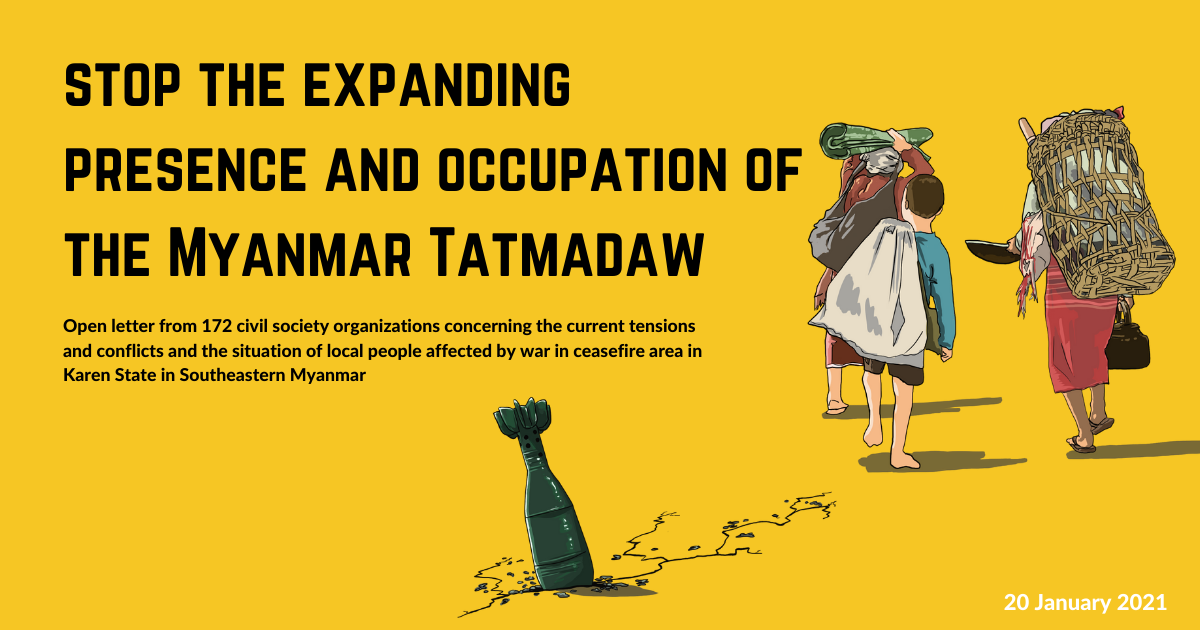
 MARUAH Singapore
You must be logged in to post a comment.